

Psychosocial Protective Factors: Why You Must Measure Strengths
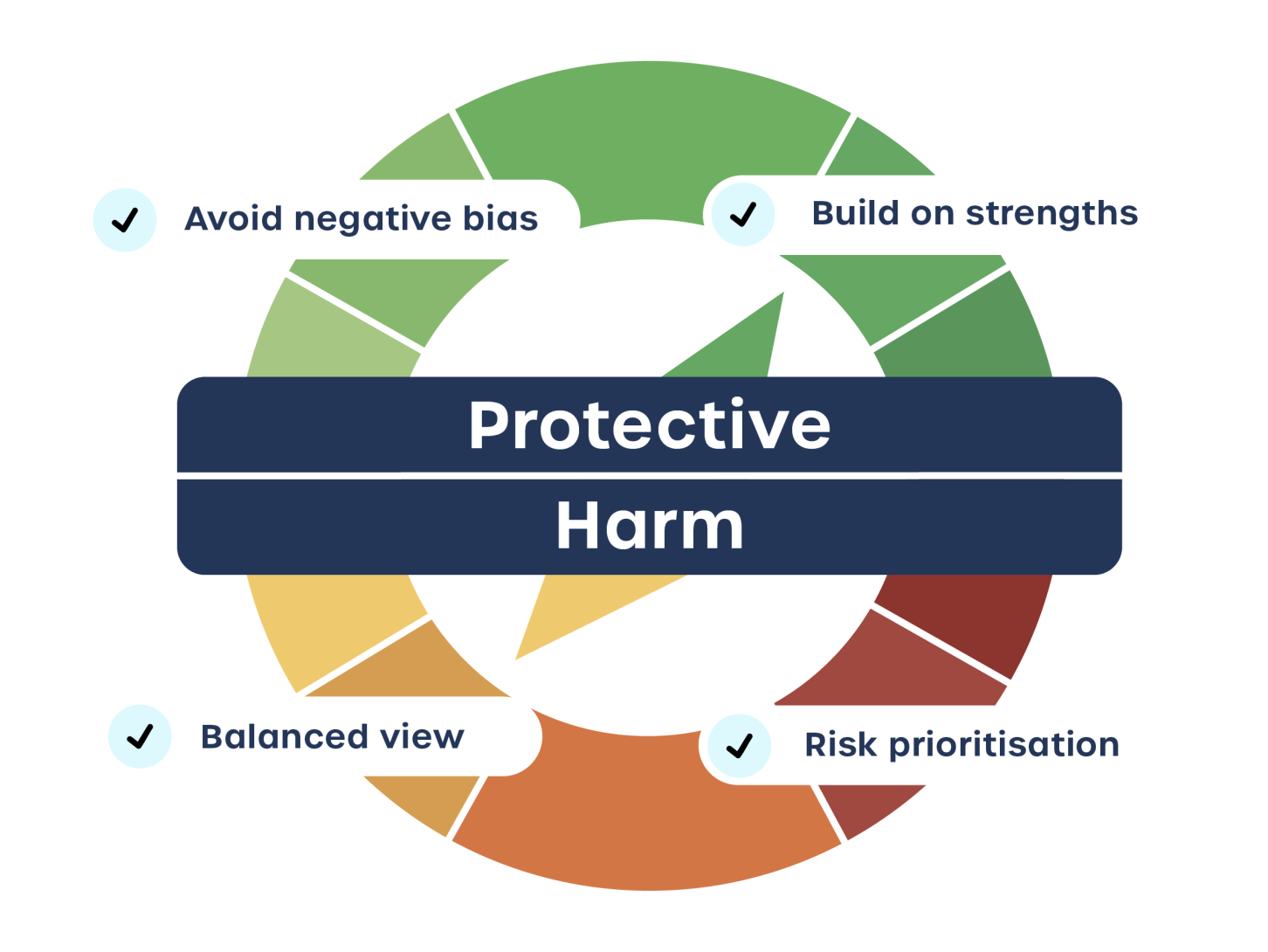
When organisations conduct a psychosocial risk assessment, the focus is often placed almost entirely on hazards, risks, and harm. While identifying psychosocial hazards is essential for compliance, this traditional risk-only model can miss one of the most powerful drivers of workplace wellbeing and performance: psychosocial protective factors.
Psychosocial protective factors are the positive work conditions that buffer stress, enhance resilience, and actively promote psychological health. They are not simply the absence of risk. They are the presence of strengths.
If organisations want a truly accurate understanding of their psychosocial system — and meaningful, measurable improvement — they must assess both psychosocial risks and psychosocial protective factors.
Below are five reasons why assessing psychosocial protective factors is best practice in any modern psychosocial risk assessment.
What Are Psychosocial Protective Factors?
Psychosocial protective factors are aspects of work that reduce the likelihood of harm and promote positive outcomes. These include:
- Supportive leadership
- Co-worker support
- Role clarity
- Job control
- Fairness
- Recognition
- Meaningful work
- Psychological safety
- Effective change management
Guidance from Safe Work Australia makes clear that psychosocial hazards must be managed like physical hazards. However, international bodies such as the World Health Organization emphasise that promoting positive work design is equally important for protecting mental health.
In other words, compliance requires hazard management — but high performance requires strengthening psychosocial protective factors.
1. Ensuring a Holistic Perspective
A risk-only approach creates an incomplete picture of the psychosocial system.
When organisations focus exclusively on psychosocial hazards, they risk reinforcing negativity bias — the cognitive tendency to prioritise threats over strengths. This can distort decision-making and create an overly deficit-based narrative about the workplace.
Assessing psychosocial protective factors provides balance.
It allows organisations to see:
- Where teams are thriving
- Which strengths are buffering high demands
- What is already working well
- Where positive practices can be replicated
Without measuring psychosocial protective factors, organisations may incorrectly assume that the absence of severe harm equals a healthy psychosocial environment. In reality, a workplace can have moderate risk but very strong protective buffers — or minimal risk but very weak positive drivers.
A holistic perspective requires measuring both.
2. Improving Leadership Buy-In
The phrase “psychosocial risk management” often triggers anxiety in leaders. It can be interpreted as:
- A legal exposure
- A compliance burden
- A criticism of management
- A cost centre
When assessments focus solely on hazards and harm, this perception intensifies.
By contrast, including psychosocial protective factors changes the conversation.
Instead of asking, “Where are we failing?”
We also ask, “Where are we strong — and how can we build on that?”
This strengths-based framing:
- Reduces defensiveness
- Encourages constructive engagement
- Increases willingness to invest in improvement
- Supports psychologically safe leadership dialogue
When leaders see that the psychosocial assessment identifies high-performing teams and strong leadership behaviours — not just risks — they are more likely to support meaningful system improvements.
In practice, assessing psychosocial protective factors often increases budget allocation because leaders can see the tangible performance upside.
3. Understanding the Interrelated Nature of Psychosocial Factors
Psychosocial systems are dynamic.
For example:
- High workload may cause significant harm in one team.
- The same workload may cause minimal harm in another team if strong psychosocial protective factors are present — such as supportive leadership and high job control.
If you measure only workload risk, you miss the buffering dynamics.
Psychosocial protective factors do not simply “offset” risk — they interact with it. They shape how demands are experienced.
For example:
- High emotional demands may be sustainable if employees have strong peer support.
- Organisational change may be energising rather than destabilising when fairness and communication are high.
Assessing both risks and psychosocial protective factors allows organisations to understand:
- Which factors are driving harm
- Which are buffering harm
- Which combinations create vulnerability
- Where high-leverage interventions exist
A purely occupational hygiene model — treating psychosocial factors as contaminants to eliminate — misses these complex interactions.
4. Respecting Individual Experience
Psychosocial experience is not uniform.
Two employees can experience the same job design differently due to:
- Personal history
- Life stage
- Neurodiversity
- Cultural context
- Career aspirations
- Health status
For one employee, high autonomy may be empowering.
For another, it may feel isolating or overwhelming.
Assessing psychosocial protective factors alongside risks respects this variability.
It acknowledges that:
- The same factor can be harmful for some and beneficial for others.
- Harm and benefit can coexist within the same environment.
- Worker consultation must capture lived experience, not just theoretical exposure.
A nuanced assessment that measures psychosocial protective factors enables organisations to identify where experiences diverge — rather than averaging them away.
This leads to more accurate and fair system design.
5. Enhancing Control Measure Effectiveness
The ultimate goal of a psychosocial risk assessment is not data collection — it is effective control measures.
When organisations assess only harm, they often default to reactive or surface-level interventions.
For example:
- Resilience training
- Awareness sessions
- EAP promotion
While these have value, they rarely address systemic drivers.
By measuring psychosocial protective factors, organisations gain insight into overall system influence. They can identify:
- Which protective factors have the strongest positive effect
- Where strengthening one factor could improve multiple outcomes
- Which risks are amplified due to weak buffers
This enables strategic prioritisation.
Rather than attempting to fix every moderate risk, organisations can focus on:
- High-leverage protective drivers
- Systemic redesign
- Leadership capability development
- Structural fairness and clarity
The result is more meaningful improvement across the psychosocial environment — not just incremental harm reduction.
Moving Beyond a Risk-Only Model
Historically, psychosocial risk management has borrowed heavily from occupational hygiene models designed for physical hazards.
While this model works well for exposure to chemicals or noise, psychosocial systems behave differently.
Psychosocial protective factors:
- Interact dynamically with risks
- Influence perception and meaning
- Shape behavioural and emotional outcomes
- Drive both wellbeing and performance
Treating psychosocial factors solely as hazards to mitigate ignores their dual nature.
A mature psychosocial framework recognises that work can simultaneously:
- Contain risk
- Generate benefit
- Create growth
- Drive performance
To capture this complexity, organisations must measure both sides of the equation.
Psychosocial Protective Factors and High Performance
Importantly, psychosocial protective factors are not only buffers against harm — they are performance multipliers.
Strong protective factors are consistently associated with:
- Higher engagement
- Lower turnover
- Better collaboration
- Increased discretionary effort
- Improved innovation
- Greater resilience during change
When organisations strengthen psychosocial protective factors, they do not merely reduce burnout. They elevate culture.
This shifts the narrative from:
“Prevent psychological injury.”
to
“Design a high-performing psychosocial system.”
Conclusion: Why Psychosocial Protective Factors Matter
If organisations assess only psychosocial hazards, they see only half the picture.
By measuring psychosocial protective factors alongside risks, organisations can:
- Gain a holistic and accurate system view
- Increase leadership buy-in
- Understand buffering dynamics
- Respect individual variability
- Design more effective control measures
- Strengthen both wellbeing and performance
The future of psychosocial risk management is not risk-only. It is balanced, data-informed, and system-focused.
Psychosocial protective factors are not a secondary consideration — they are central to building psychologically healthy, high-performing workplaces.