

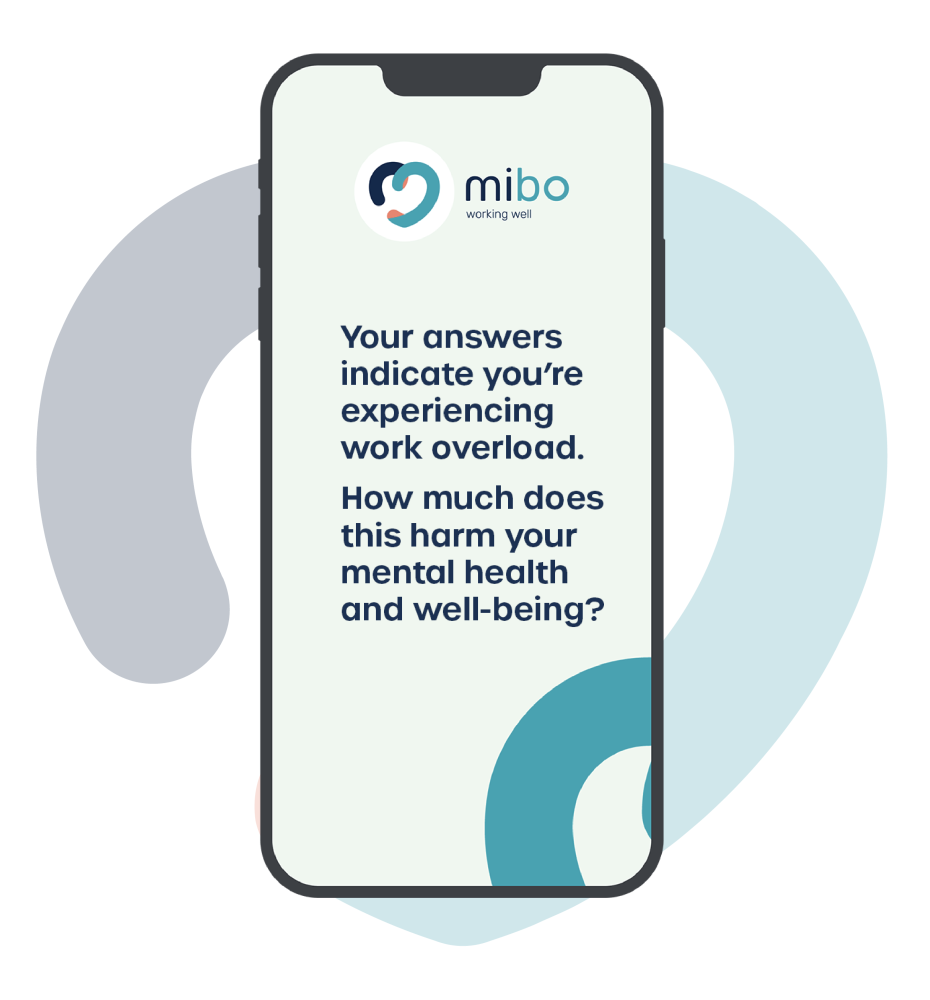

Combined Hazard ID and Psychosocial Risk Assessment Tool
Our survey seamlessly combines rigorous hazard identification and risk assessment within a single validated psychosocial risk assessment process.
Based on Hazard ID responses, individuals are placed into either support or hazard groups for each factor. The risk assessment is then conveniently completed via tailored follow-up questions capturing perceived mental health and well-being harms and benefits.

Psychosocial Risk Assessment Tool Key Predictors
We incorporate critical lead indicators: Psychosocial Safety Climate (PSC) which is a well-researched predictor of future staff health and work outcomes; and Respect at Work, our evidence-informed measure of your organisation’s climate of harmful behaviour prevention and response.
Psychosocial Survey Work Factors
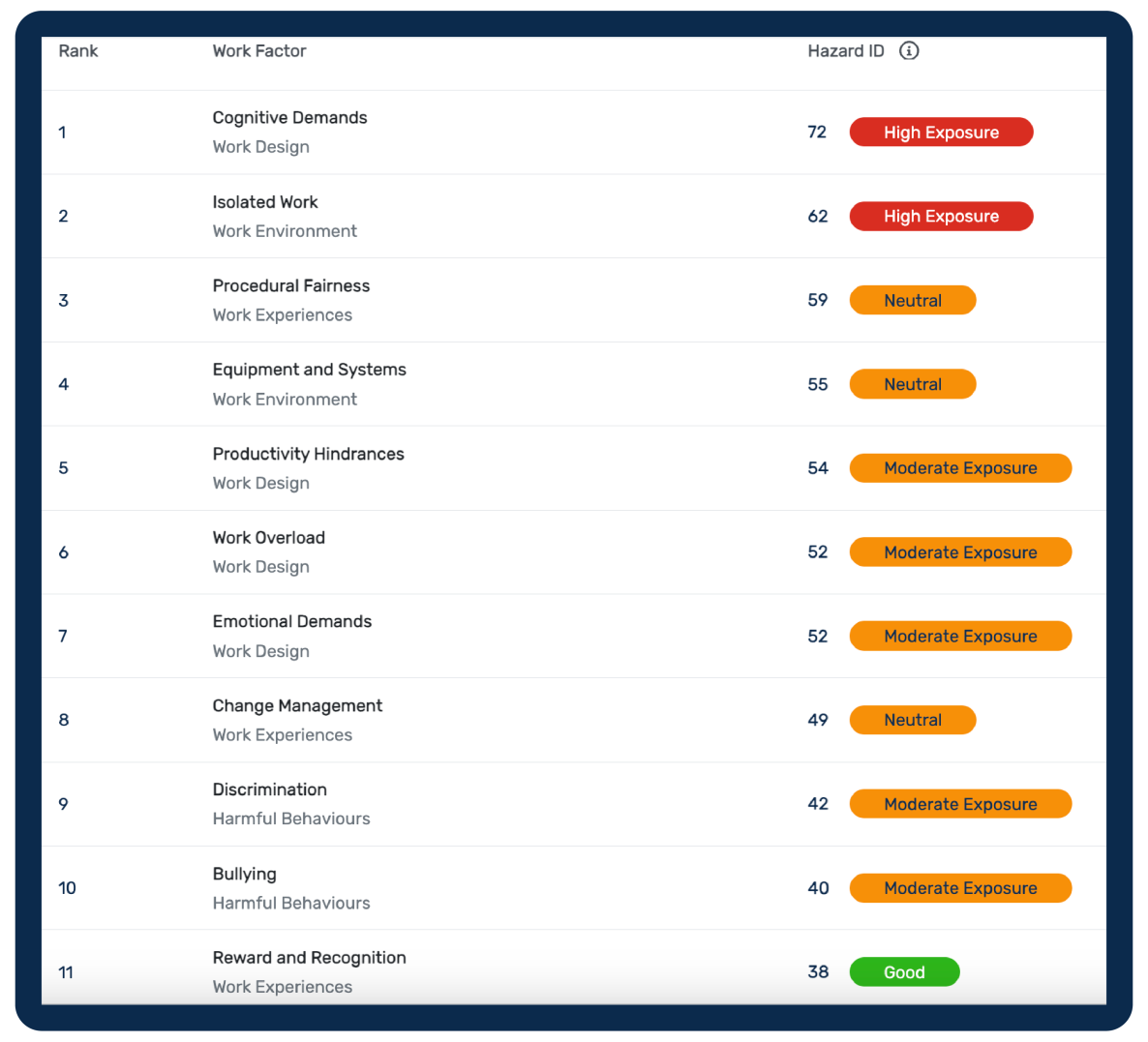
Our risk assessment tool contains 24 work factors that provide nuanced insights by separating factors such as Job Demands to avoid the data blending that occurs when multifaceted factors are grouped together. We also examine unique factors like Productivity Hindrances which often contributes to perceived work overload, and Counterproductive Workplace Behaviour which pose significant risks to both organisational health and reputation.
High Priority Factor Follow-up
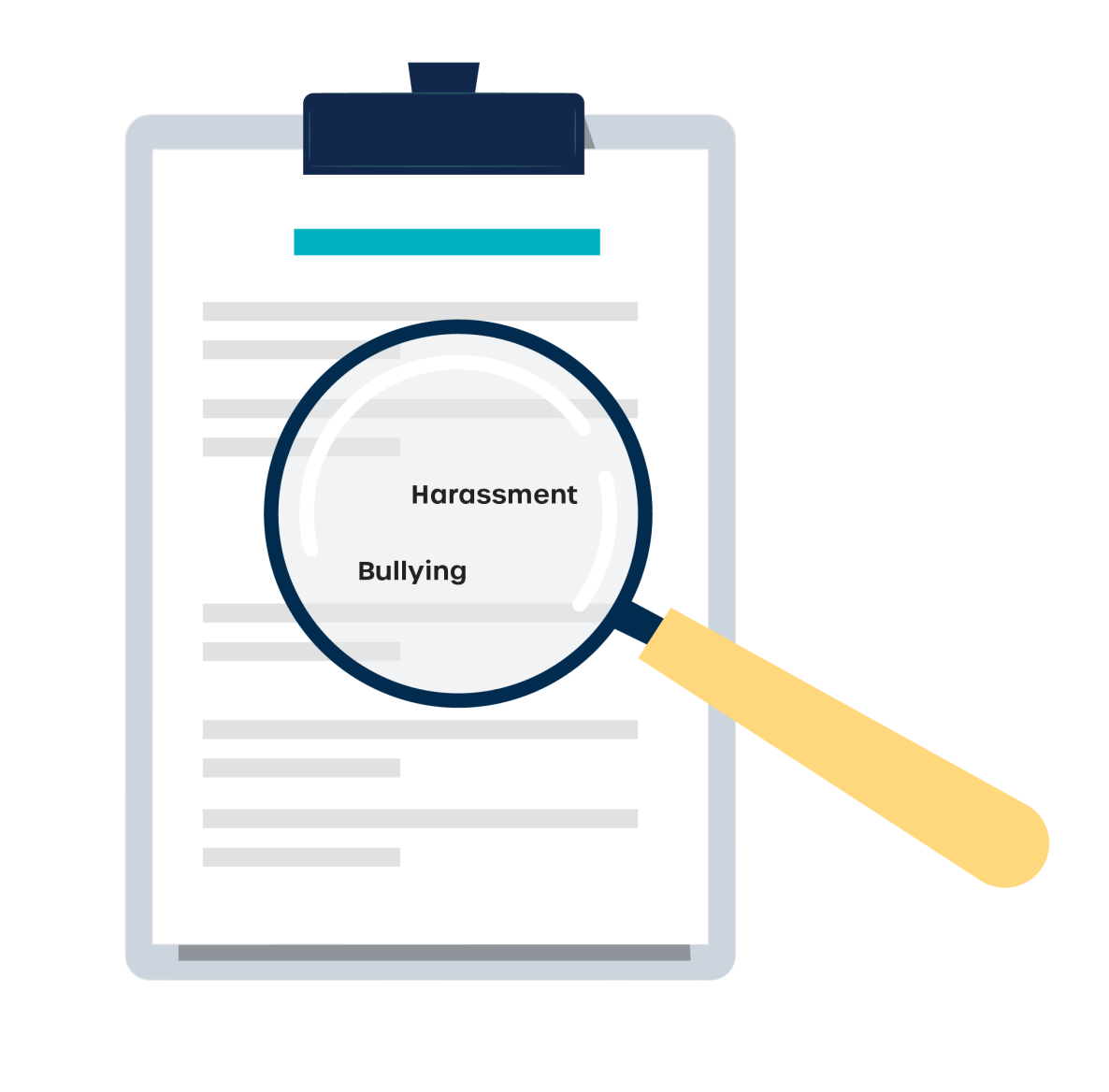
For factors like Trauma and Harmful Behaviours, our psychosocial survey dynamic follow-up questions capture de-identified details regarding the nature and source of hazard exposure, providing insights organisations often seek
Key Work Outcomes
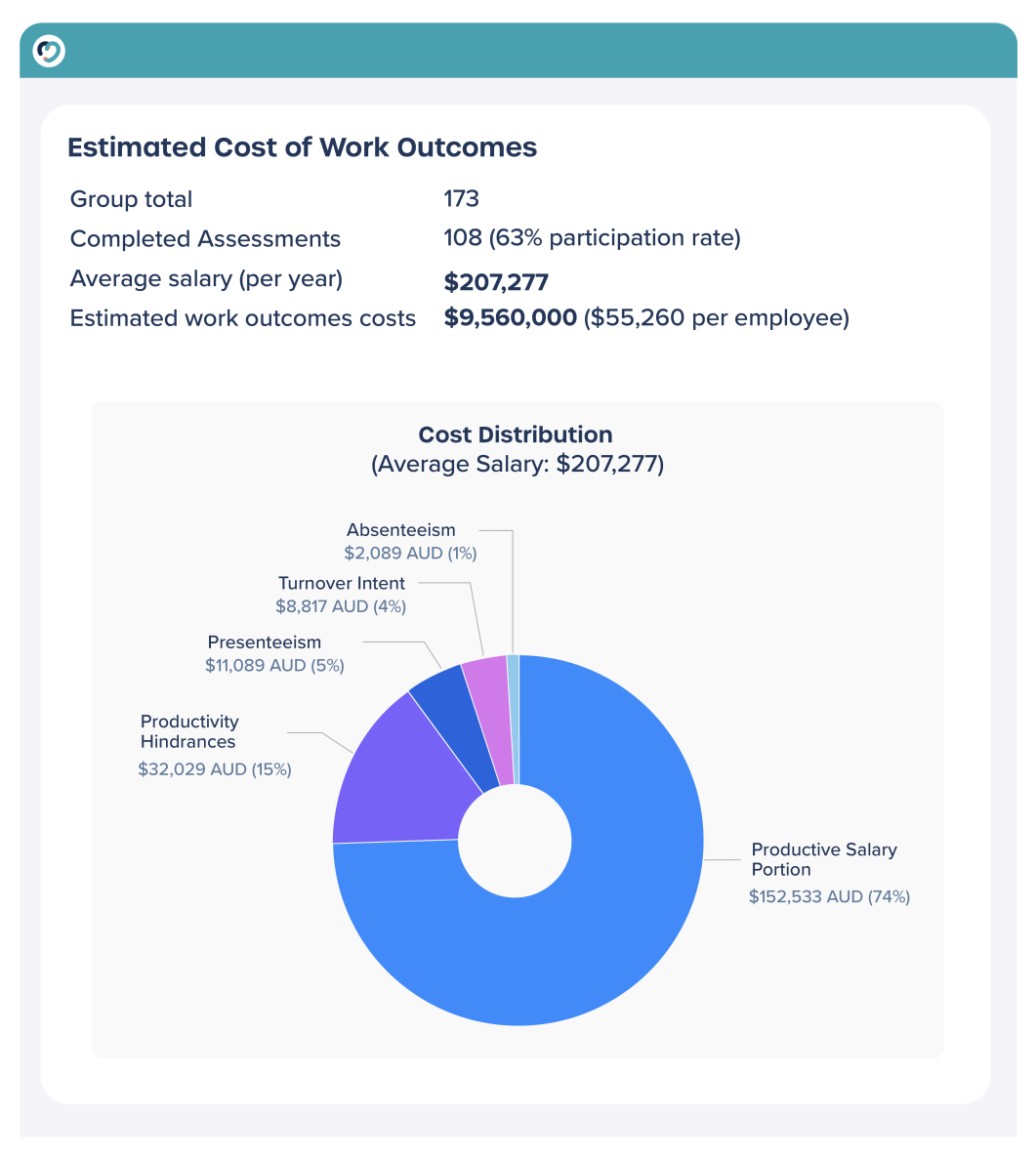
Our psychosocial risk assessment tool also uniquely calculate direct costs linked to the psychosocial environment via the assessment of Burnout and job-stress-related Absenteeism, Presenteeism, and Turnover Intent. This helps communicate job stress related financial costs and control measure ROI to boost leadership buy-in.
Pulse Checking and Customisation Ability
We also offer amazing flexibility to suit your goals. This includes the ability to customise the assessment and pulse check assessment factors.